
Product Feed

A product feed is the structured, machine-readable representation of a catalog. Under agentic commerce it stops being a marketing channel artifact and becomes the primary interface to buyers.
Agentic Commerce. Last reviewed August 2026.
In this entry
6sections
Definition
A product feed is the structured, machine-readable representation of a catalog — one record per sellable item, with typed attributes, identifiers, availability and price.
Feeds are not new; retailers have maintained them for Shopping and marketplace channels for years. What changes under agentic commerce is their status. A feed used to be a derivative artifact for one marketing channel. It is becoming the primary interface through which a growing share of buyers encounter the product at all.
Agents compare on attributes, not adjectives
This is the whole problem in one line.
An agent asked for a laptop under a weight threshold with a specific port configuration does not look at your photography and does not respond to your tone. It reads fields. A product whose weight lives in a sentence in the description — “impressively light at just under 1.3 kg” — is, to that agent, a product with no weight. It is excluded from the comparison before quality is ever considered.
The fix is unglamorous: lift specifications out of prose into typed fields, complete the attributes that matter in your category, and structure variants so size, colour and configuration are queryable rather than encoded in a title string.
What tends to be missing
- Category-critical specifications buried in description HTML.
- Variant structure flattened into separate products, or encoded in the title.
- Stable identifiers — GTIN, MPN, or an internal SKU that actually joins to inventory and pricing.
- Availability that reflects reality, not a nightly snapshot, when the agent will act on it now.
- Dimensional and material data that comparison questions routinely turn on.
The join-key problem underneath
A feed is only as good as the systems behind it. If your storefront, ERP and warehouse disagree about what a product identifier is, the feed inherits that disagreement — and an agent will surface a confidently wrong availability or price.
This is the same data-layer work that eCommerce AI agents depend on internally, which is why merchants who fix it once get paid twice.
Why this is the low-regret move
Standards may shift. ACP and UCP are competing and neither has won. But a complete, correctly typed catalog is required by both, improves conventional Shopping and on-site search, and was worth doing before agents existed.
If you do one thing in agentic commerce this quarter, do this one.
Related terms
Agentic commerce · Agent checkout · Generative engine optimization · Agentic Commerce Protocol
Around this term

Ask
Our AWS-certified team implements, audits and tunes Product Feed in production. Tell us what you are building.
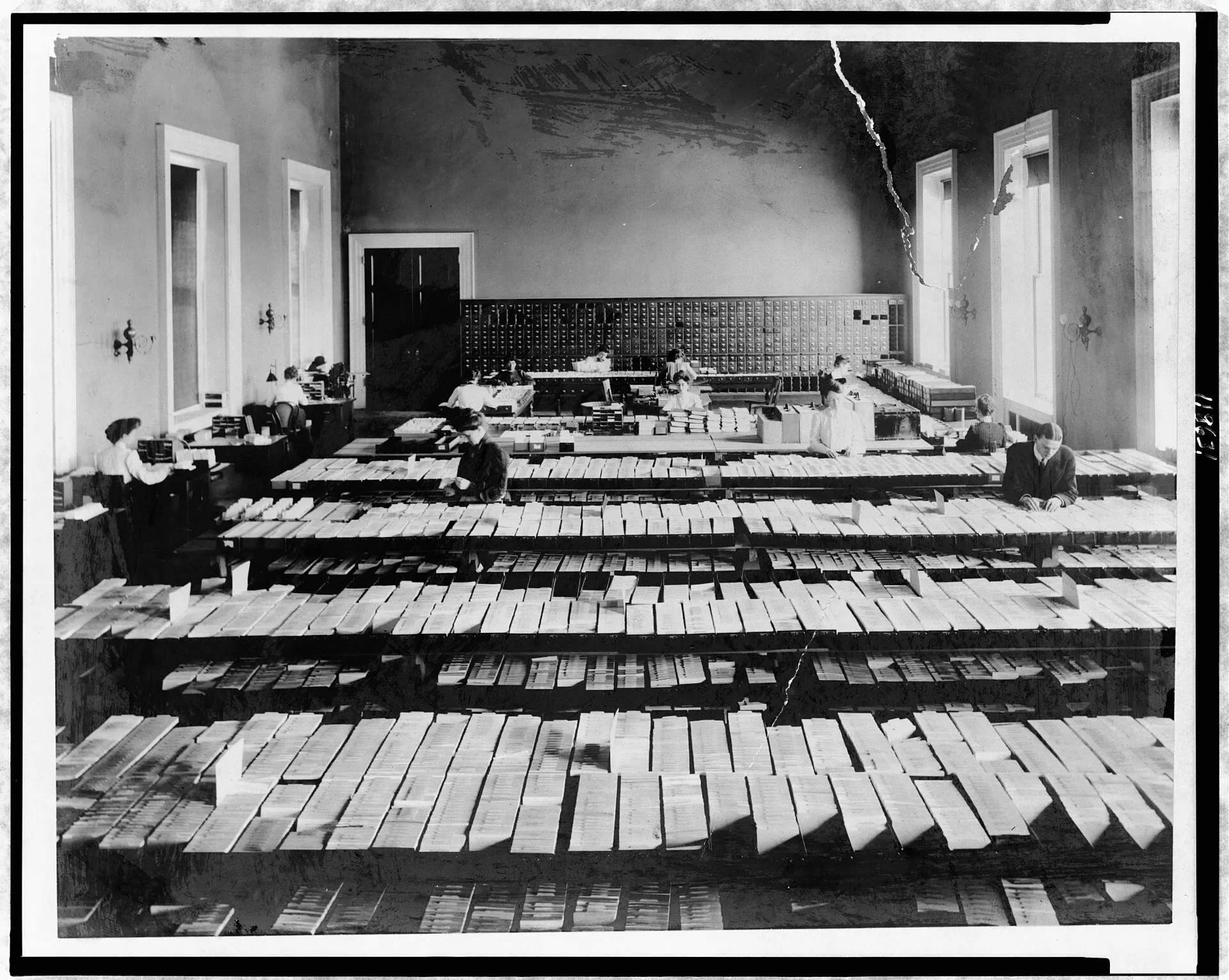
Pictures:James Murray in the Scriptorium (public domain); Card Division of the Library of Congress, 1900–1920 (public domain); Salle des catalogues, Bibliothèque Mazarine, Paris, Marie-Lan Nguyen (CC BY 2.0); Copyright card catalog drawer, Michael Holley Swtpc6800 (public domain); Type in sort case, Edinburgh City of Print (CC BY 2.0); Widener Library reading room, 1920 (public domain). Via Wikimedia Commons.


